AI PRODUCT DESIGN · REALEFLOW
Baxter
An AI layer threaded through a real estate investor's deal pipeline, meeting each task in the surface that task already lives in, and proposing rather than taking the wheel. Designed, proposed, and approved by the CTO and COO in product review.
00 — At a glance
One line.
An AI layer that meets the investor inside each task, in that task's own surface, and always leaves them holding the decision.
What this page proves.
That embedding AI into a professional's existing workflow is a design problem about surface and behavior, not about the model. A chain of real decisions: where the AI appears, whether it acts or asks, whether its work can be argued with, and whether it leaves anything you can keep. Each one made and approved, not generated.
01 — The Problem
The work is not one task, it is a chain.
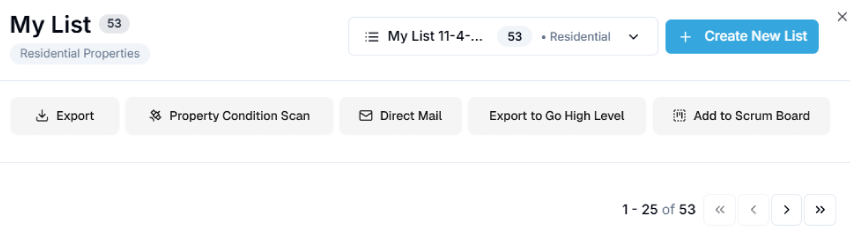
A real estate investor does not do a single thing. They find a lead, judge whether the numbers work, estimate what the rehab will cost, reach the owner, and move the deal through stages, over and over, across a stack of tools that do not talk to each other. The data to make each call exists somewhere. Acting on it at the moment the call is live is the part that breaks down.
The two easy ways to add AI, both wrong.
The obvious move in 2025 was to bolt a chatbot onto the side of the product: a window you have to remember to go visit, disconnected from the task in front of you. The other easy move was to over-automate, to let the AI take the wheel and rearrange the deal for you. In a domain where every call is a real financial decision, taking the wheel removes the one thing the investor is there to exercise, which is judgment about their own money.
The real problem, stated once.
The job was not to add an assistant. It was to put intelligence at the point of each decision, in the surface where that decision already happens, without ever taking the decision away from the person making it.
02 — The Frame
The decision: one product, many surfaces, not one chat window.
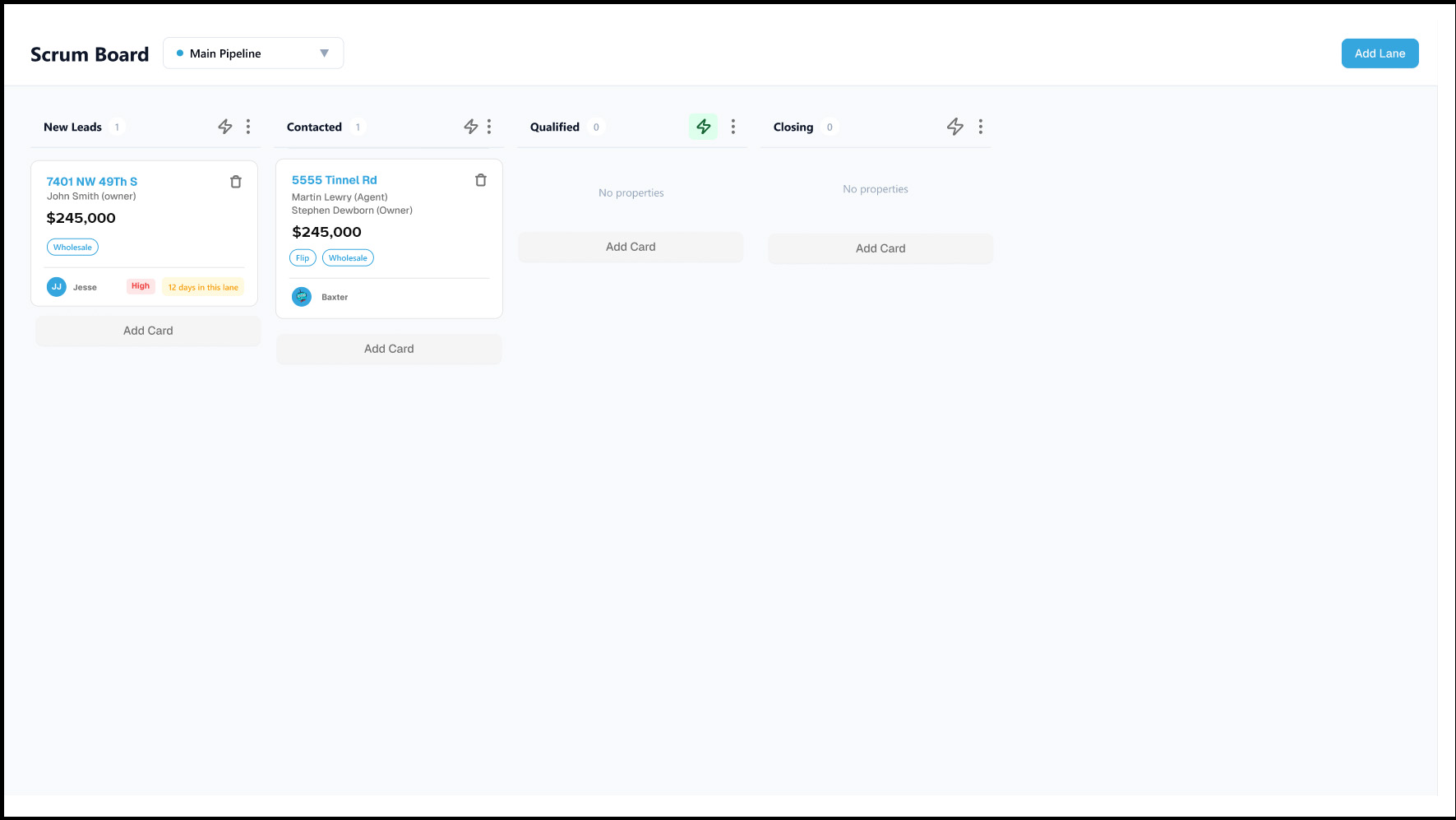
The load-bearing call was to refuse the single assistant window. Baxter is not a place you go. It appears where the work is: a quiet prompt on the board when you change a deal's stage, a full working document when you run the numbers, an inline assessment on the property page, a background job when routine outreach needs sending. Each capability meets the task in the task's own surface, which is the difference between AI that feels woven in and AI that feels bolted on.
Why the surface is the design.
Cramming every capability into one conversation is the reflex, and it is the junior version, because it makes the person carry the work of translating their task into chat. Choosing the right surface per task moves that work back into the product. A stage change should be met by a one-line offer, not a command you have to phrase. A deal analysis should be a document you can keep, not a message that scrolls away. The modality is not decoration on the feature, it is the feature's judgment about how the person actually works.
03 — Proposes, Never Imposes
The decision: the AI initiates, the human decides.
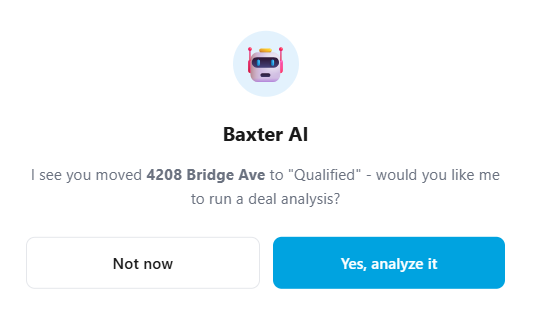
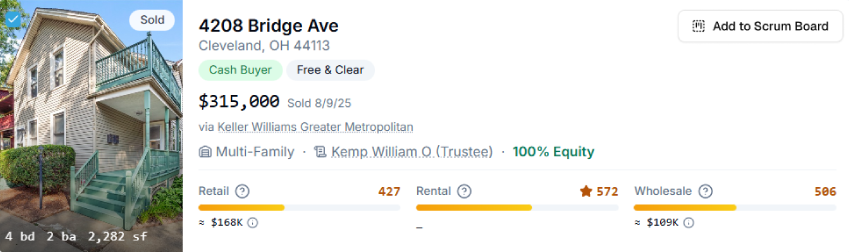
Baxter is allowed to notice and to offer. It is never allowed to act on a deal on its own. When you move a property into Qualified, it does not run an analysis and present a result; it asks whether you want one, with a plain "Not now" that costs nothing. The intelligence is proactive, the authority stays with the person. In a domain where the AI is reasoning about someone's money, that line is the whole basis of trust.
Consent is not a one-time gate, it runs through every output.
The stance repeats everywhere Baxter produces something. Every analysis, every estimate ends the same way: how does this look, and would you like to change it. The AI never closes a loop on its own authority. It does the labor and hands back the decision, every time, which is what lets an investor lean on it without feeling managed by it.
04 — Correction and Artifacts
The decision: every result is arguable, in plain language.
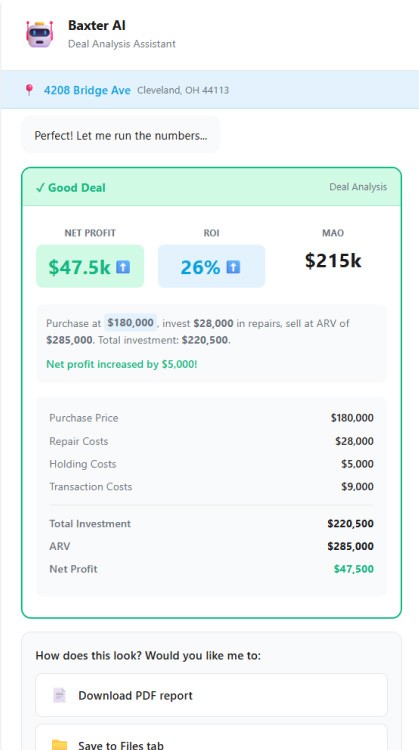
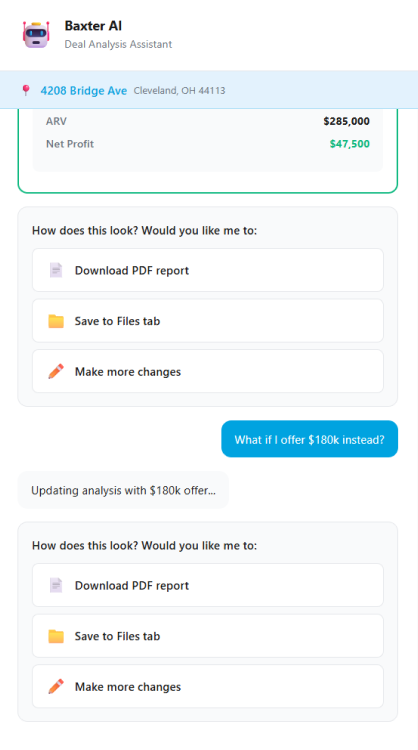
An AI number the user cannot push back on is a number they cannot trust. So every result Baxter produces can be argued with in words, at the moment it is shown. Tell the deal analysis "what if I offer $180k instead" and it recomputes in place. Tell the repair estimator the roof needs full replacement and the line item and the total move with you. The person is never stuck with the first answer, and never has to start over to change one input.
The decision: the output is a durable thing you own, not a message that scrolls away.
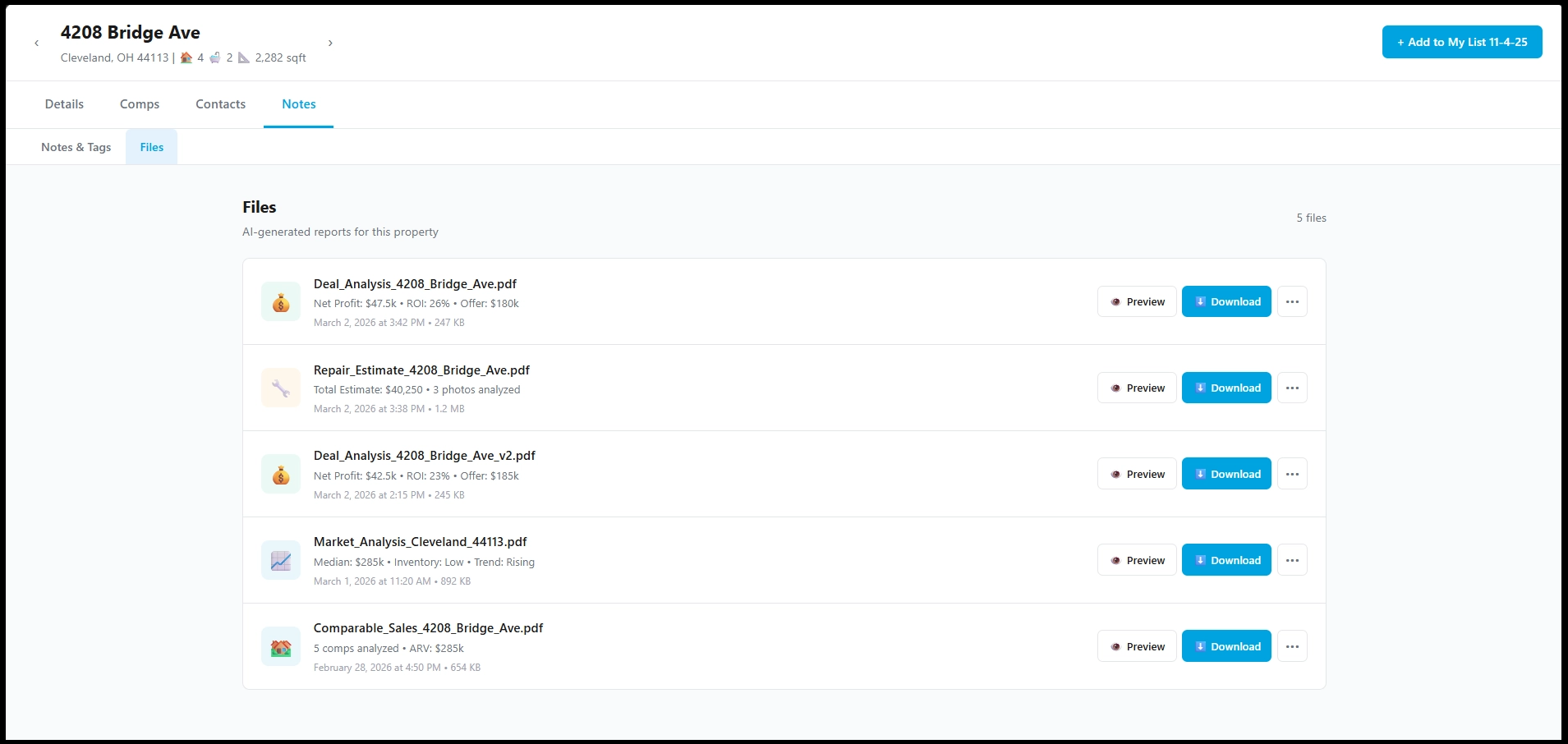
Baxter's work does not evaporate into a chat log. A deal analysis becomes a PDF pinned to the property. A repair estimate becomes a document in the property's Files tab. And because a real investor reworks a deal more than once, the artifacts version honestly: the $180k analysis and the $185k rerun both sit in the file list, each a record you can pull up, download, or share. The AI produces documents, not disappearing answers.
05 — Meet the Data Where It Lives
The decision: two doors to one capability, so the user is never blocked on format.
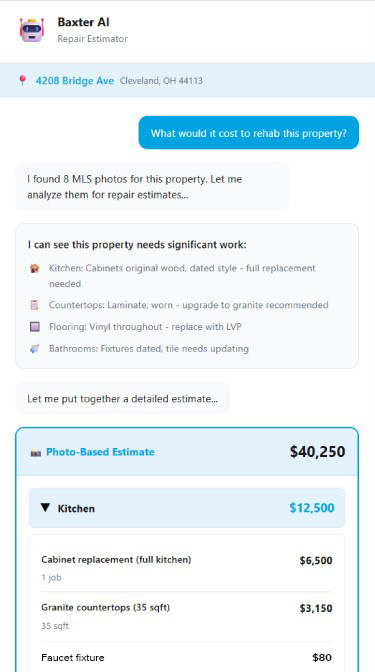
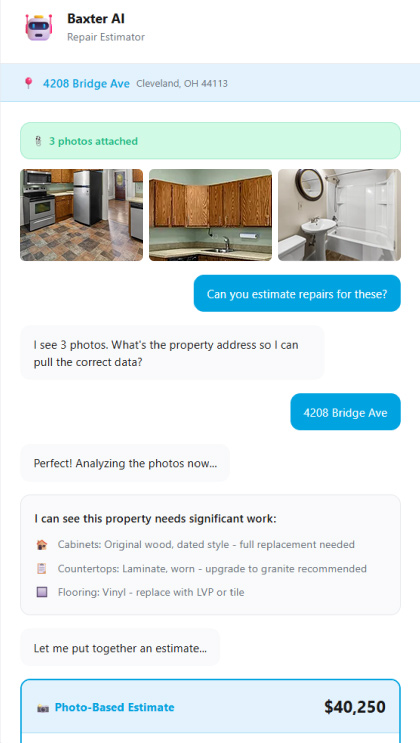
A repair estimate should not depend on the investor having the right kind of file. So the estimator has two paths to the same result. It can read the MLS photos already attached to a listing and estimate from those, or it can take photos the investor drags in from a walkthrough. Same capability, met wherever the person's data actually is. Nobody is turned away for having their information in the wrong shape.
The decision: the analysis bends to how the person invests.
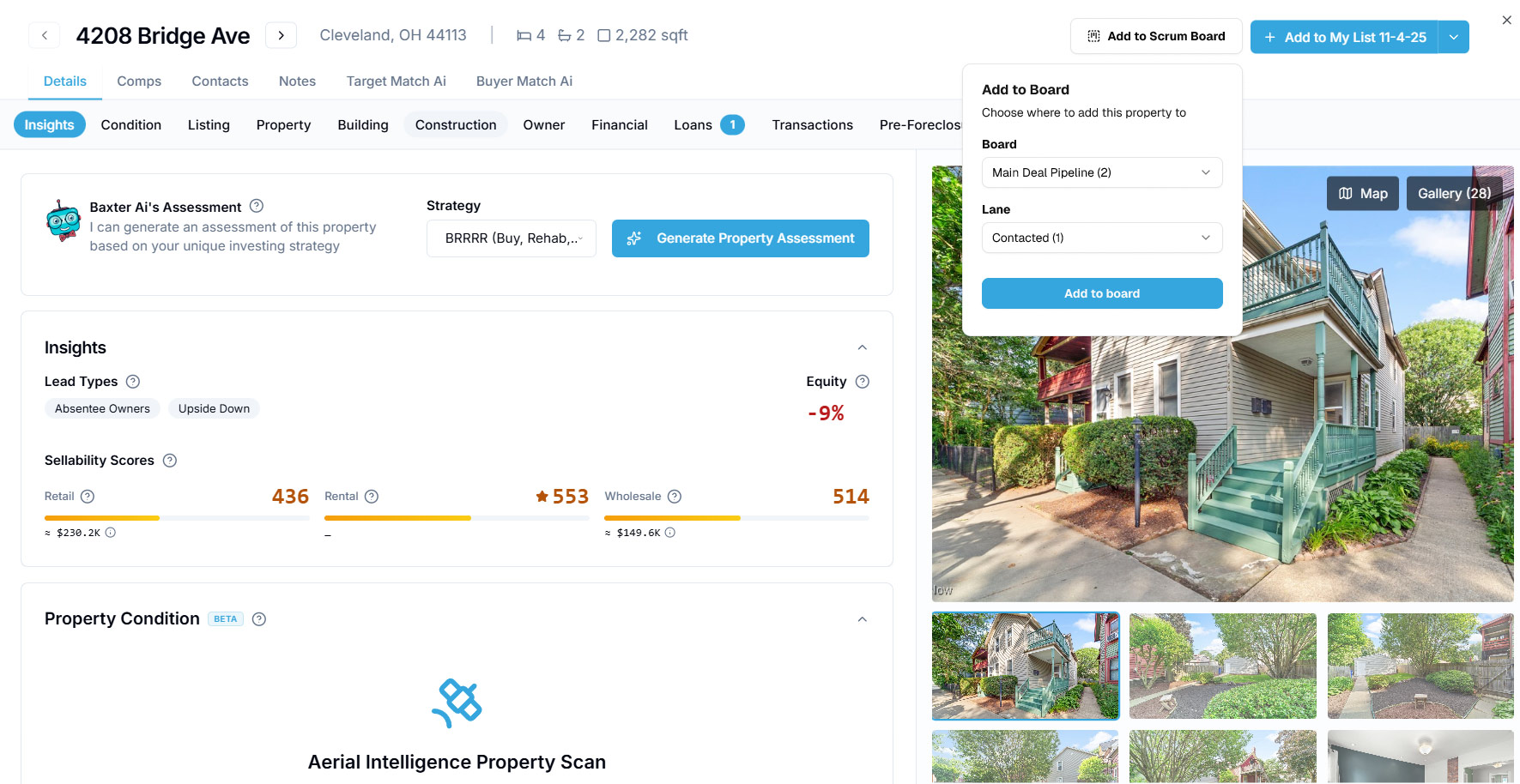
There is no single generic score, because there is no single generic investor. A flip, a BRRRR, a wholesale, and a buy-and-hold judge the same property by different math, so the strategy is an input, and the assessment is computed against the investor's actual approach. The AI meets not just the user's data but the user's intent.

06 — The Background Layer
The decision: not every AI capability should be a conversation.
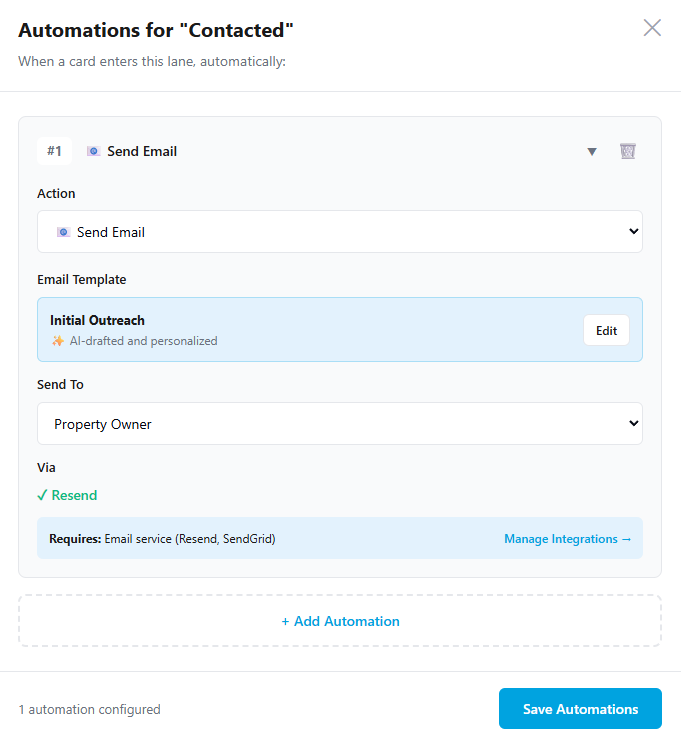
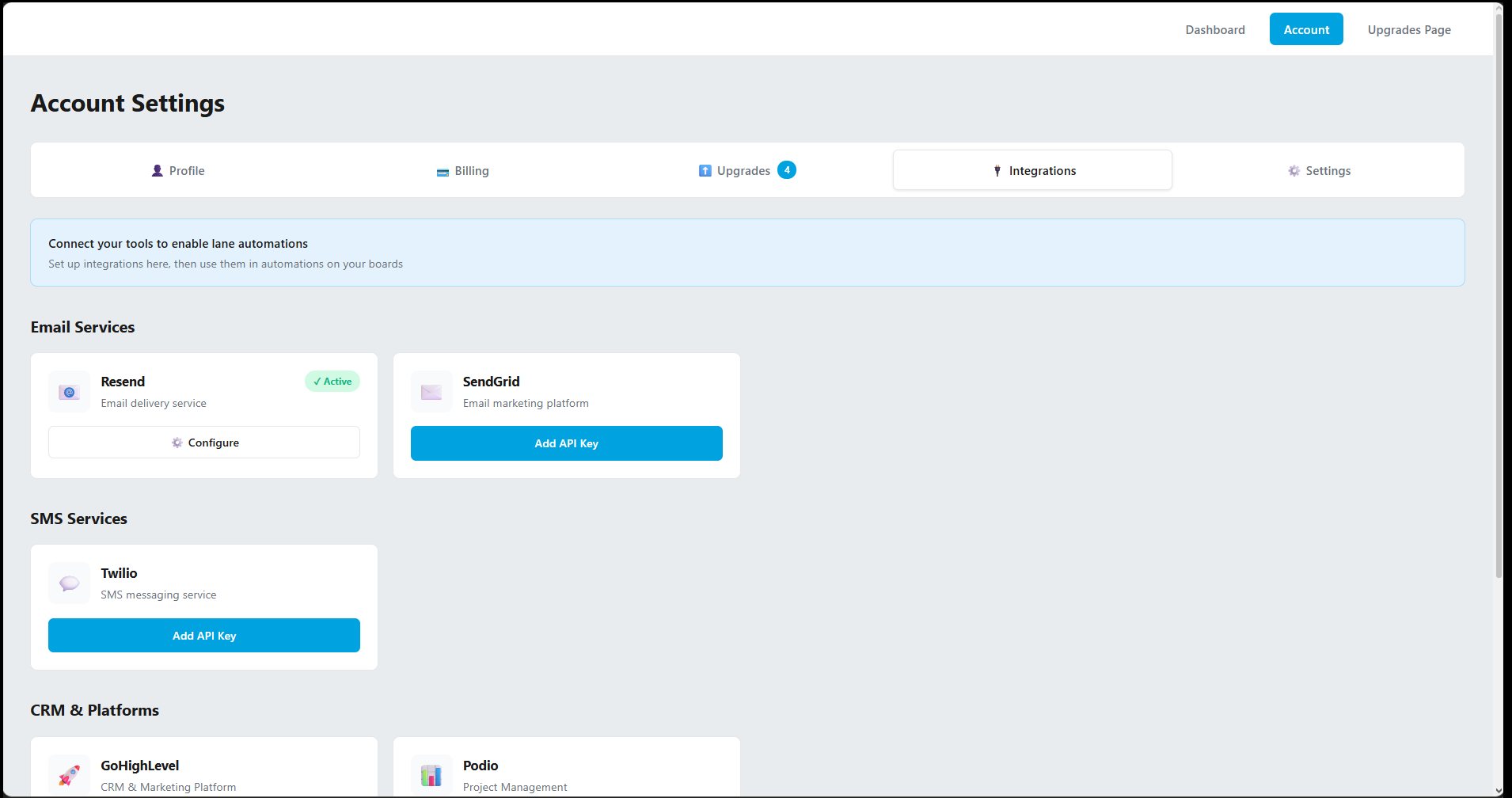
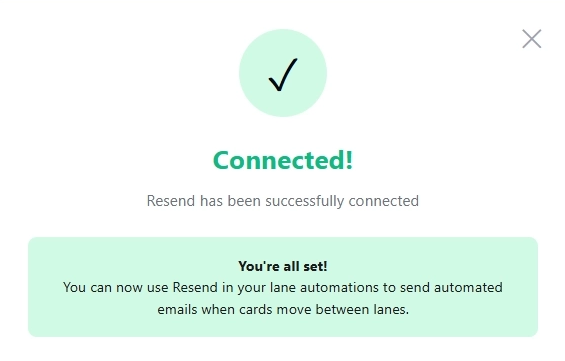
Some of the work is repetitive and rule-shaped, and forcing it through a chat would be its own kind of friction. So the routine communication runs as ambient automation instead. When a deal enters a lane, a configured action can fire: an AI-drafted, personalized outreach email to the property owner, sent through the investor's own connected email service. Baxter is interactive where judgment is needed and ambient where it is not.
Even the ambient layer is configured, never autonomous.
The background actions are not the AI deciding to email people on its own. The investor sets them up per lane, connects their own tools, and the automation runs inside those explicit rails. It is the same stance as the rest of the product, held one level down: the AI does the labor, the human sets the terms.
07 — How AI Fit
Where the design work actually sat.
The design was the decisions, not the pixels. Where Baxter appears and where it stays out, whether it acts or asks, how a result gets argued with, what the AI leaves behind, and which work belongs in a conversation versus a background rule: those are the calls this page is built on, and they were human design calls, made and defended in review. The interaction model is the product, and the interaction model was designed.
What the AI does in the product.
In use, the AI does the labor those decisions frame. It reads photographs and turns them into itemized repair costs, it parses a plain-language "what if I offer $180k" and recomputes, it drafts personalized outreach, and it reasons about a property against a chosen strategy. Real multimodal, plain-language capability, placed deliberately rather than sprinkled on.
One honest note on authorship.
This layer was built in an AI-assisted workflow, and the seam is worth naming rather than blurring. The flows were mine: every decision on this page about where Baxter appears, whether it acts or asks, and how a result gets corrected. So were the surfaces that carry the product's spine, the board and its nudge, the pipeline entry points, and the property-page assessment, each built by hand. The other mocks, the deal analysis, the repair estimator, the files, and the integration and automation screens, were produced with AI, which also helped tighten the copy and the flows throughout. The line that matters held: the decisions stayed human, and AI was a tool in the making, not the maker of the calls.
08 — Status and What's Next
Status, stated plainly.
Everything on this page was designed, proposed, and approved by the CTO and COO in product review at Realeflow, through March 2026. That is a real bar: the work survived executive review at the company, it was not a solo concept. What this page does not claim is a ship. I moved on in March, and the CTO has since confirmed the layer has not been built. Approved and unbuilt is the accurate description, so it is the one the page uses, rather than a "shipped" badge that would not be true.
What the work demonstrates.
Built or not, the thing this proves is the same: a full AI product reasoned surface by surface, decision by decision, in the domain of someone's real money, with the judgment kept in human hands the whole way. That argument does not depend on a deploy date.
On what this is.
This was employed work at a real company, taken from problem to approved design across a real investing platform. It is the piece on this site where the AI-product-design thesis meets a real product and a real stakeholder table, and it holds up as design regardless of what the codebase looks like today.